New Exhibition Explores History and Impact of Tarot Since the Renaissance
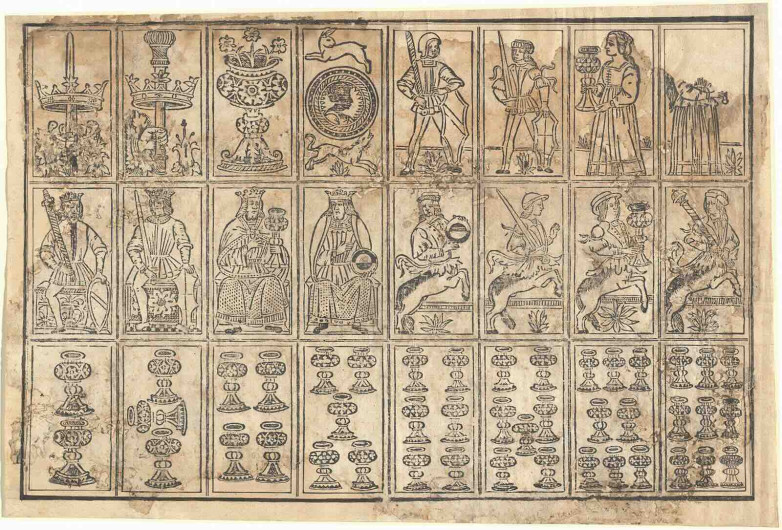
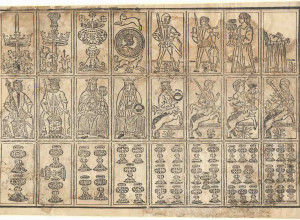
Unidentified artist, Rosenwald Tarot, Italy, Florence, ca. 1500



Tarot! Renaissance Symbols, Modern Visions opens tomorrow at The Morgan Library & Museum exploring the origins of tarot in Renaissance Italy and its enduring source of inspiration for modern artists.
The first part, Renaissance Symbols, focuses on the earliest surviving tarot decks from the 15th century, examining the court culture from which the cards emerged, the development of the cards’ imagery, and how that imagery became the basis for later divination practices. This is followed by Modern Visions which traces artists’ engagement with tarot imagery through history.
The impetus for the exhibition was the Morgan’s Visconti-Sforza Tarot cards, the most famous deck to survive from the Renaissance, commissioned to commemorate the marriage of two powerful families in Milan. It was probably created by the artist Bonifacio Bembo. Tarot! reunites all 45 figural cards in the Morgan’s collection with those in the collection of Accademia Carrara, Bergamo, Italy, marking the first time the majority of the cards from this important deck will be displayed together in North America.
The exhibition will also include cards from two other closely related decks, the Visconti di Modrone Tarot in Yale University’s collection and the Brambilla Tarot from the Pinacoteca di Brera, Milan.
Originally created as a courtly game of skill, tarot was not associated with occult secrets, divination, or the power of fate until centuries later. There is no evidence that tarot served divinatory purposes until the 18th century. At that time, the Tarot de Marseille (ca. 1760) codified the visual traditions of the Visconti cards and established the format that would shape tarot imagery and practice for centuries, including the iconic Rider-Waite-Smith deck, created in the early 20th century.
The exhibition will runs through October 4.



![Origen of Alexandria (c. 185–253) Homilia in Genesim, Homiliae in Exodum, in Latin, translation by Rufinus, decorated manuscript on parchment [Austria, Lambach Abbey? c. 1150–1175]. Estimate: $150,000-$200,000.](/sites/default/files/styles/category_card/public/media-images/2026-06/origen.jpeg?itok=0V_4_Lt2)